



Towing 101
Payload & Distribution Basics
Safe towing starts with knowing what your trailer can carry and where that weight should go. This guide explains GVWR, payload, tongue weight, and the 60/40 loading rule in plain language.
MAINTENANCE & OWNERSHIP
Know the Weight. Place It Right.
A trailer can have the right rating and still tow poorly if the load is in the wrong place. Before you leave, you need to know your legal weight limits, your real payload, and how your cargo is sitting on the trailer.
- GVWR is the maximum loaded trailer weight. It includes the trailer and everything on or in it.
- Payload is the cargo weight you can add after the empty trailer weight is removed.
- The 60/40 rule is a helpful starting point for load balance, but tongue weight should still be checked.

Trailer Capacities Explained
What GVWR Really Means
GVWR stands for Gross Vehicle Weight Rating. It is the maximum the trailer is rated to weigh when it is fully loaded. That number includes the trailer itself, the cargo, fluids, tools, and added options. A 14,000 lb GVWR trailer cannot carry 14,000 lb of cargo. The trailer weight has to come off first.
The Simple Payload Formula
Payload = GVWR minus empty trailer weight. If accessories, options, ramps, toolboxes, or equipment are added later, those items can also reduce available payload. This is why two trailers with the same GVWR can have different payload ratings.
The 60/40 Loading Rule
For many bumper-pull trailers, a common starting point is to place about 60% of the cargo weight ahead of the trailer axle line and about 40% behind it. This helps create downward force on the hitch and can reduce trailer sway. This rule is not a guarantee. Always confirm tongue weight, trailer ratings, and tow vehicle ratings.
Tongue Weight Matters
Tongue weight is the downward force the trailer puts on the hitch. Too little tongue weight can make the trailer sway. Too much tongue weight can overload the tow vehicle or hitch. For conventional bumper-pull trailers, 10% to 15% of loaded trailer weight is a common range, but gooseneck, fifth-wheel, and specialty trailers can be different. Follow the trailer and tow vehicle guidance for the exact setup.


SAFETY REVIEW
Loading Safety Is a System, Not One Number.
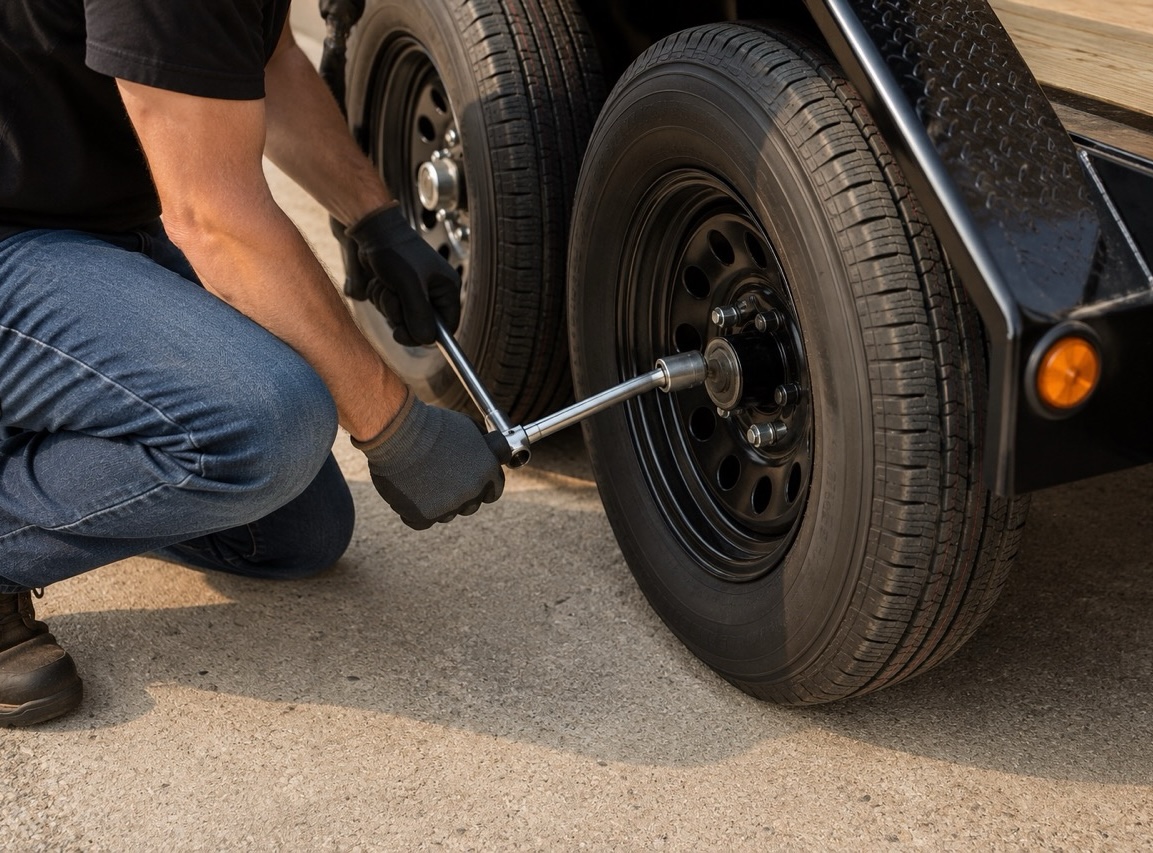
Maintenance should be simple, but it should never be guessed. Use this schedule as a starting point, then confirm the exact service interval and torque values with the correct manual for the trailer, axle, brake, tire, hydraulic, and coupler system.
Different trailers work in different conditions. A trailer used daily in gravel, salt, mud, fertilizer, construction debris, or winter roads may need service sooner than a trailer used lightly on clean pavement.
When in doubt, stop using the trailer and contact an authorized Southland dealer or qualified technician before towing.

Towing FAQs
No. GVWR is the total loaded trailer weight. Payload is the cargo weight left after the empty trailer weight is removed.
No. It is a helpful starting point for many bumper-pull trailers. Gooseneck, fifth-wheel, dump, and specialty setups can need different weight balance.
When too much weight sits behind the axle line, the trailer can start pushing and swinging instead of tracking straight behind the truck.
Use a scale when possible and check GVWR, GAWR, tire ratings, hitch rating, and tow vehicle ratings before towing.