


Support & Longevity
Professional Maintenance Schedule
MAINTENANCE & OWNERSHIP
Small Checks Protect Big Parts.
Most trailer problems start small. A soft tire, loose connection, dry hinge, weak battery, worn brake part, or missed bearing service can turn into downtime later. Regular maintenance helps catch those issues before they become expensive repairs.
- Check before every trip: Look at the connection, tires, lights, brakes, latches, and load before the trailer leaves the yard.
- Service during the season: Inspect moving parts, wiring exits, brakes, wheels, and grease points on a regular schedule.
- Inspect deeper once a year: Have wheel bearings, brakes, suspension, hydraulics, and finish condition checked before small wear becomes major damage.


Every Trip: The 60-Second Walkaround
Tires
Check cold tire pressure using the tire label, tire sidewall, or owner manual guidance. Look for cuts, bulges, uneven wear, or sidewall damage.
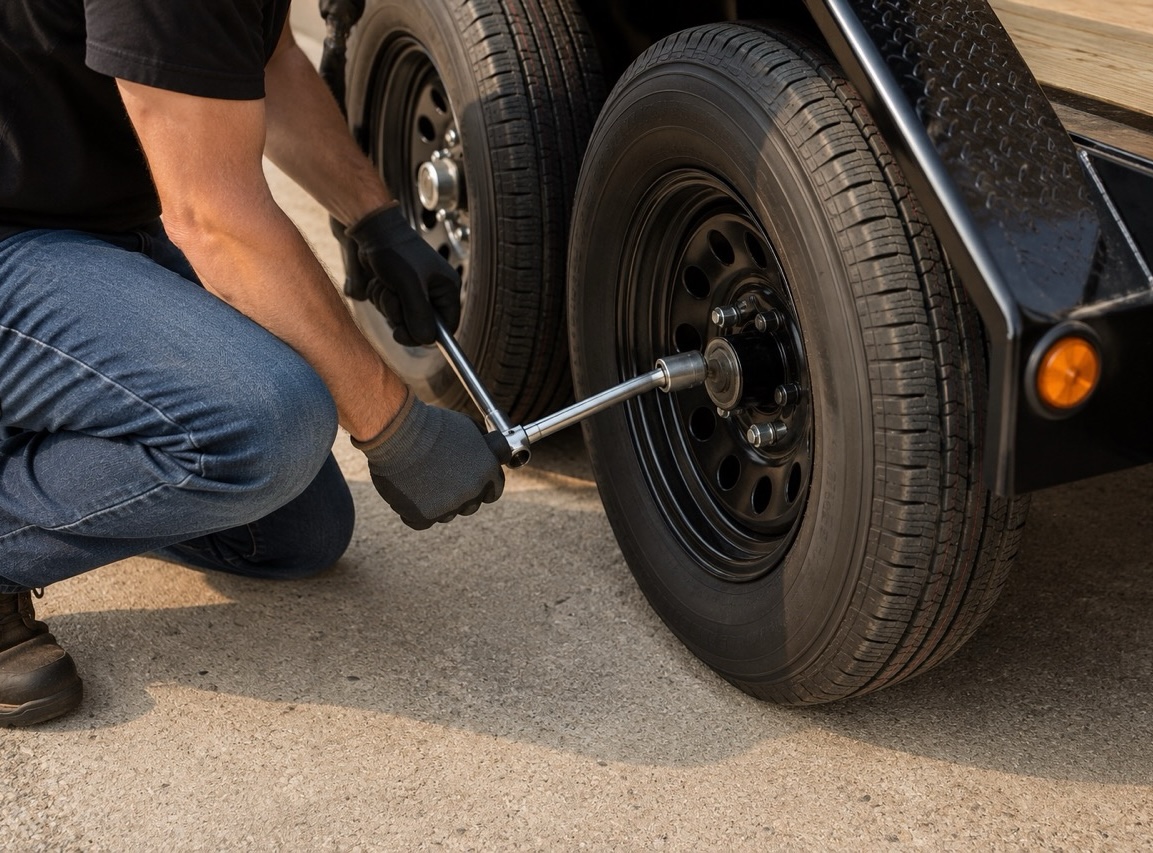
Wheels and lug nuts
Look for missing, loose, damaged, or rusty wheel hardware. Re-torque to the correct specification when required, using the Lippert wheel torque specifications provided in the Knowledge Hub.
Coupler or hitch
Confirm the coupler is fully seated, locked, and pinned. For gooseneck or fifth-wheel style connections, confirm the correct lock system is engaged.
Safety chains or cables
Attach them to the tow vehicle. Cross bumper-pull chains when applicable and keep chains or cables from dragging.
Breakaway system
Attach the breakaway cable to the tow vehicle, not to the safety chains. Confirm the breakaway battery is charged where equipped.
Electrical plug and lights
Seat the plug fully. Check brake lights, turn signals, hazard lights, marker lights, and license plate light where equipped.
Brakes
Test trailer brake function at low speed before driving at road speed.
Load, doors, ramps, and gates
Confirm cargo is secured, the load is balanced, and all doors, ramps, gates, pins, and latches are locked for travel.

5,000 km / Quarterly: The Seasonal Tune-Up
Wheel torque
Confirm lug nut torque using the applicable Lippert wheel torque specifications. Do not guess.
Grease points
Lubricate hinges, jacks, couplers, suspension points, and other zerks where equipped.
Brakes
Inspect brake function and wear. Southland trailer brakes are self-adjusting. RENN equipment may use a different brake setup, so follow the applicable manual or service guide to your trailer.
Wiring exits
Check where enclosed wiring exits the frame for loose clips, debris, rubbing, or damaged insulation.
Latches and moving parts
Inspect ramps, doors, gates, pins, hinges, locks, and jack operation.
Battery and charging system
For dump trailers and powered systems, check battery condition, terminals, remote plug, charger, and solar maintainer where equipped.
Wash and visual check
Remove mud, salt, gravel, and road film. Look for rock chips, coating damage, loose hardware, or cracks.

Annual / 15,000 km: The Deep Inspection
Wheel bearings
Inspect, clean, and repack as required by the applicable Lippert axle maintenance guide. Replace seals when hubs are removed.
Brake system
Inspect linings, magnets, drums, wiring, and self-adjusting brake operation. Replace worn or contaminated parts.
Suspension
Inspect springs, hangers, shackles, bushings, equalizers, U-bolts, and axle alignment.
Hydraulic system
For dump and hydraulic trailers, check automatic transmission fluid (ATF) level, hoses, fittings, cylinders, pump, remote, and leaks. Never work under an unsupported raised bed.
Frame and deck
Inspect frame, crossmembers, sills, welds, deck boards or floor, ramps, tiedowns, and rub rails where equipped.
Finish and corrosion
Touch up exposed chips with approved touch-up paint and clean areas exposed to salt, brine, fertilizer, or chemicals.
Records
Write down date, mileage, service completed, parts replaced, and the technician or dealer who performed the work.

QUALITY ASSURANCE
Do Not Maintain From Memory.
Maintenance should be simple, but it should never be guessed. Use this schedule as a starting point, then confirm the exact service interval and torque values with the correct manual for the trailer, axle, brake, tire, hydraulic, and coupler system.
Different trailers work in different conditions. A trailer used daily in gravel, salt, mud, fertilizer, construction debris, or winter roads may need service sooner than a trailer used lightly on clean pavement.
When in doubt, stop using the trailer and contact an authorized Southland dealer or qualified technician before towing.

Maintenance FAQs
Check the trailer before every trip. The quick walkaround should include the tires, wheels, hitch, chains or cables, breakaway system, plug, lights, brakes, load, gates, ramps, and doors.
Regular bearing inspection and grease service are important, but the exact interval depends on the axle, hub type, and use. Follow the applicable Lippert axle maintenance guide for your trailer.
Check tire pressure cold and follow the tire label, trailer manual, or tire manufacturer guidance. Do not tow with visibly damaged or under-inflated tires.
Some basic checks can be done by the owner. Brake, bearing, hydraulic, structural, and electrical repairs should be handled by a qualified technician if you are not trained to do them safely.