

Fewer Leak Paths
Removing panel overlaps cuts out common spots where rain and melting snow can enter.


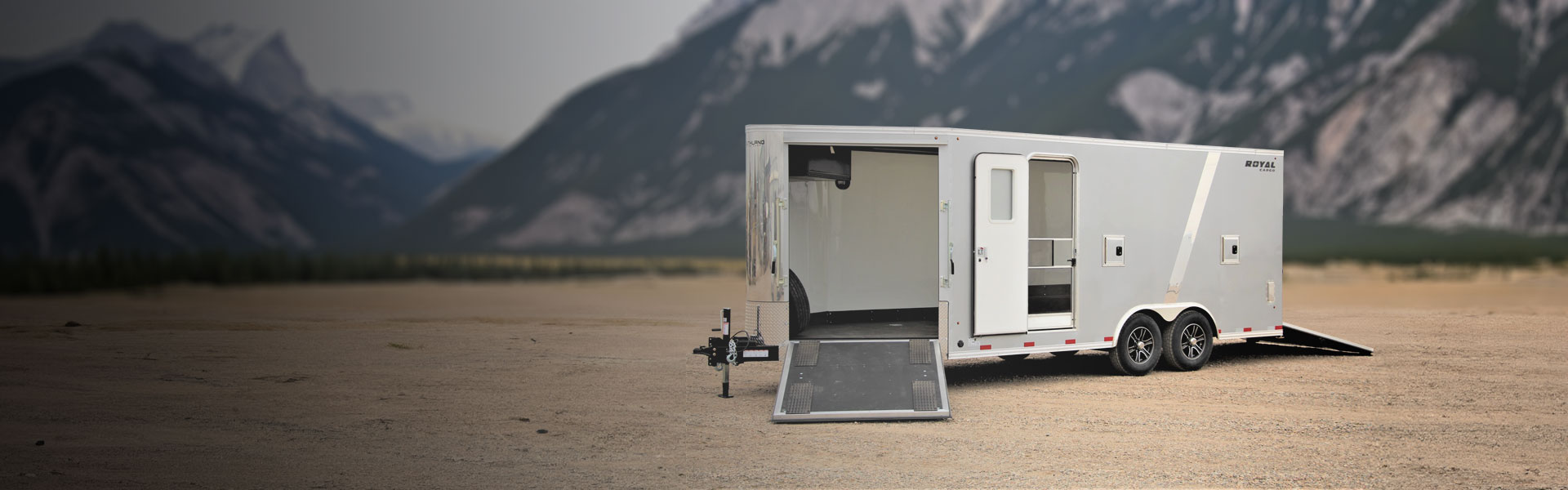
A cargo trailer roof should keep water out, not give it places to sneak in. Most Royal Cargo trailers use a one-piece seamless aluminum roof. By removing roof panel seams, the design cuts out one of the most common leak paths.
Standard trailer roofs often use several metal panels joined together. Each overlap, screw, and seal line can loosen as the trailer shakes down the road. A one-piece roof uses one continuous sheet over the main roof area to reduce those weak spots.
Your cargo trailer protects tools, inventory, and equipment. The roof is the first line of defense against weather, so the design needs to be simple and strong.
The main roof is built from one sheet of aluminum with no center panel seams to pull apart.
Fewer seams mean fewer extra screws that can loosen from road vibration and weather changes.
The roof helps keep jobsite tools, business inventory, and materials dry during transport and storage.
A trailer roof moves, expands, and contracts as weather changes. Multi-panel roofs have more joints that must keep sealing through that movement. A one-piece seamless aluminum roof lets the main roof area act as one sheet instead of several pieces rubbing together. It reduces the chance of hidden water getting into walls, flooring, insulation, and wiring. Edge seals, vents, and trim still need normal inspection, but the main roof deck removes a major leak risk.

It is a trailer roof made from one continuous aluminum sheet over the main roof area, instead of several overlapping panels.
Leaks often start where panels overlap, screws loosen, or sealant cracks from vibration and weather changes.
No roof is maintenance-free. You should still inspect vents, trim, and edge seals, but the main roof has fewer leak points.
This roof is standard on most Royal Cargo trailers. Some custom builds may use a different roof option based on the model.