

Made for Load Weight
The upward curve is built to work under cargo, not to look flat in the yard.


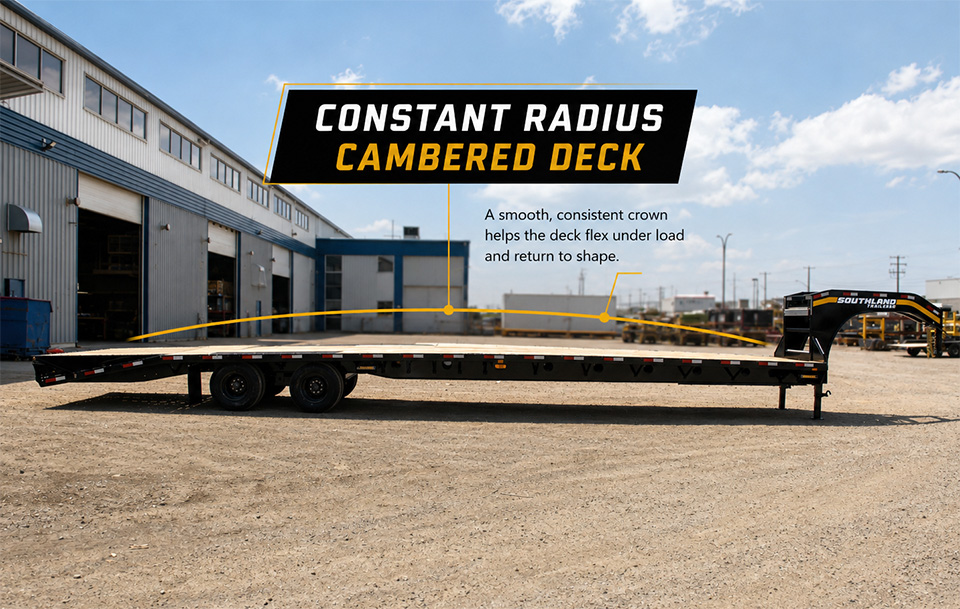
A heavy-duty trailer should be judged when it is loaded, not just when it is parked empty. Southland uses a constant radius cambered deck on select heavy-duty trailers. This built-in upward curve is designed to settle toward level when the trailer carries heavy weight.
A flat empty trailer can sag once thousands of pounds are added. That sag can stress the frame, axles, tires, and welds. A cambered deck starts with a slight upward curve so the loaded trailer settles into its working shape.
Heavy hauling follows the rules of physics. A cambered deck helps the frame flex in a planned way instead of taking damage from repeated sagging.
The constant radius shape spreads stress across the frame instead of creating a sharp bend.
The frame is built around how the trailer behaves when heavy cargo is actually on the deck.
Helping the deck stay level under load can improve tracking and reduce uneven tire wear.
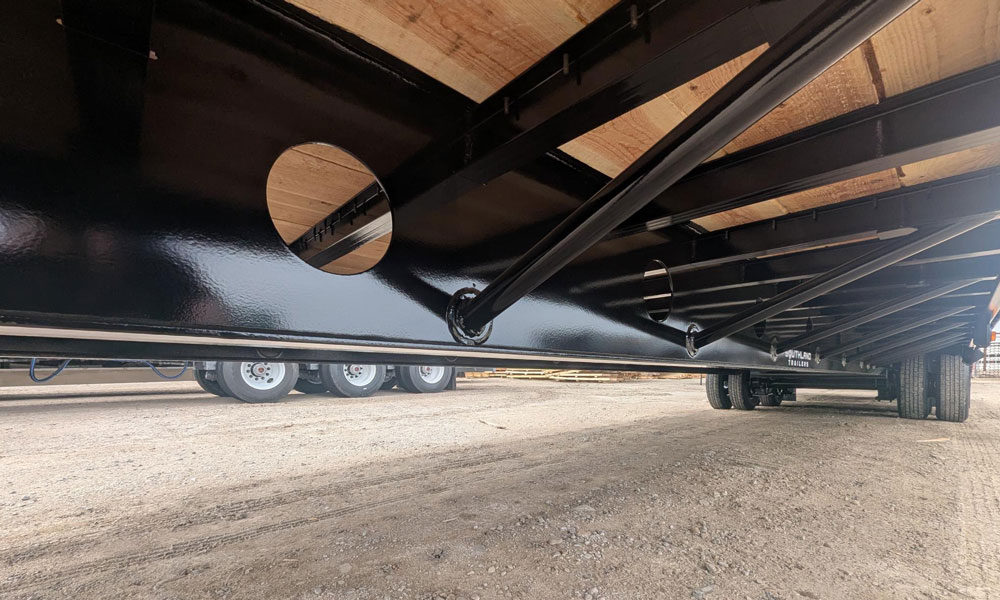
A trailer proves itself under load. A constant radius cambered deck uses one smooth upward curve through the main frame. When heavy equipment is loaded, the frame flexes downward toward its ideal working shape. This helps control sag and reduces long-term stress. On select Southland goosenecks, deckovers, and Renn Industrial Flatbeds, the camber works with engineered beams and high-tensile steel to support serious payloads without adding steel just for show.

It is a trailer deck built with a slight upward curve that is meant to level out when cargo is added.
That is intentional. The curve is there so the trailer does not sag too far once it is loaded.
It means the curve is smooth and steady, not a sharp bend in one place.
No. On these models, camber is an engineered feature built into the frame for heavy hauling.